
The 15 Year Battle for Martin Luther King Jr. Day
Story by: Smithsonian National Museum of African American History and Culture
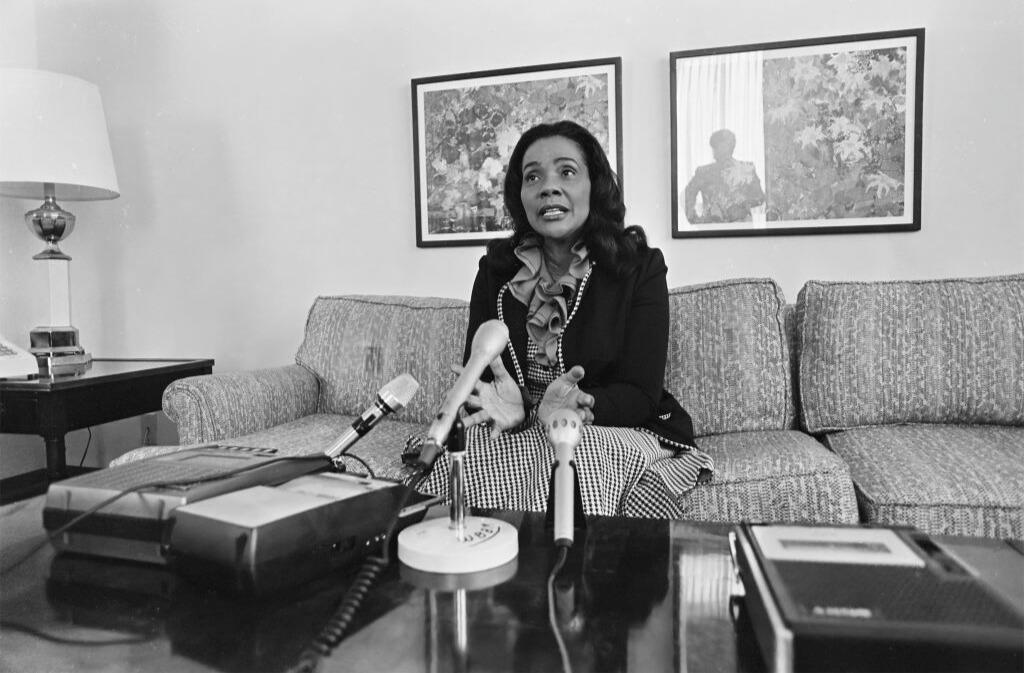
“No other holiday serves as a focal point for encouraging improved race relations. This holiday can help unify Americans in the spirit of Martin’s dream.”
Coretta Scott King, American Civil Rights Activist, 1985
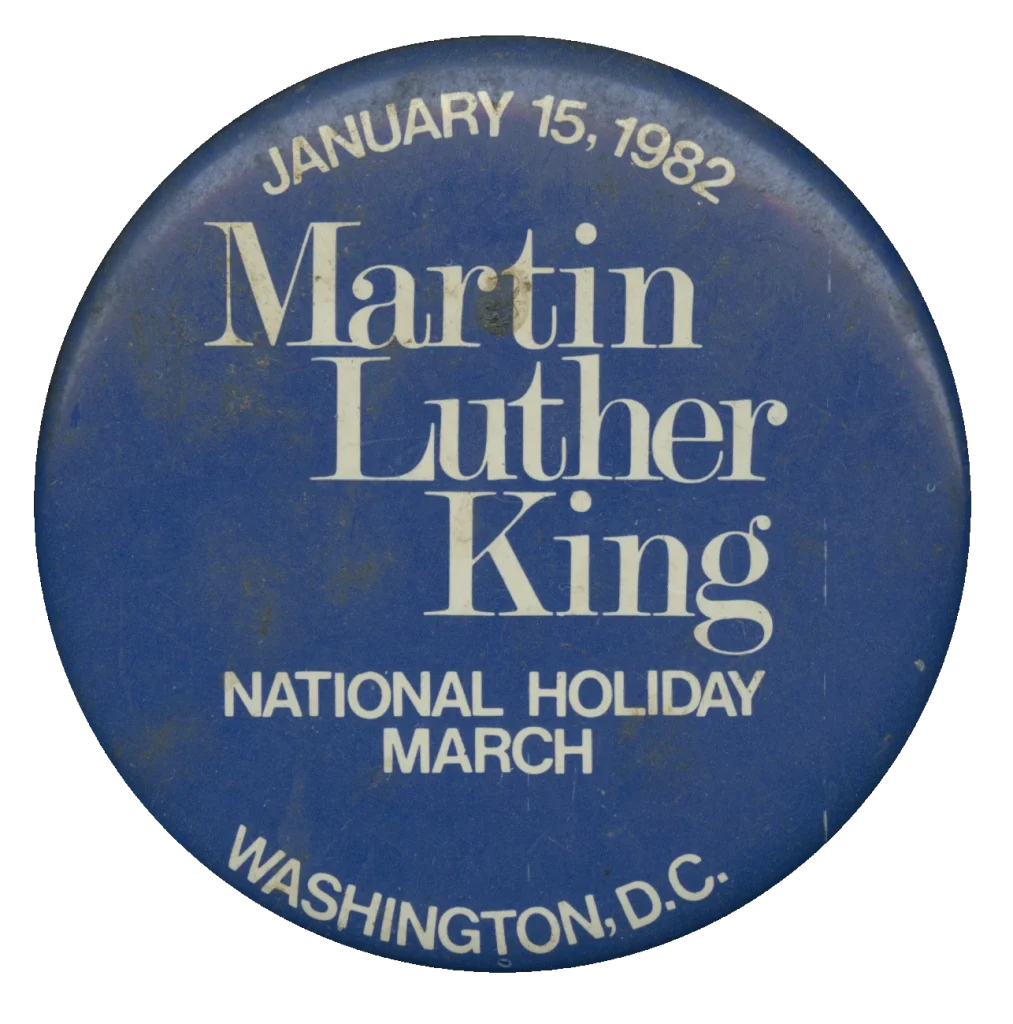
Collection of the Smithsonian National Museum of African American History and Culture

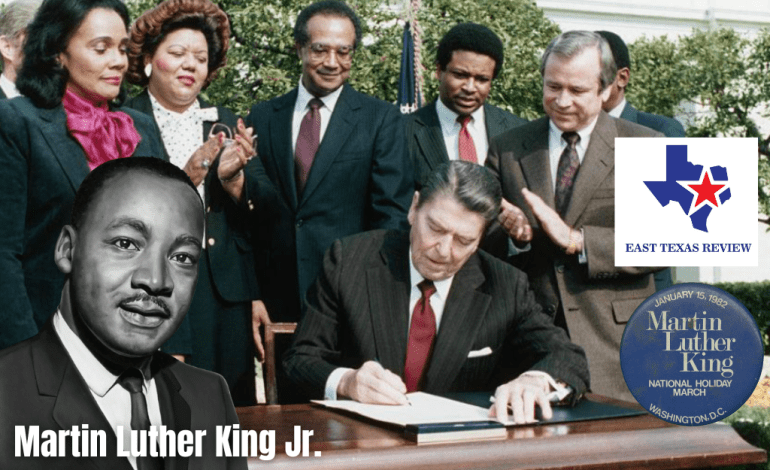
On November 2, 1983, President Ronald Reagan signed the King Holiday Bill into law, designating the third Monday in January a federal holiday in observance of civil rights leader Dr. Martin Luther King Jr. The legislation to recognize Martin Luther King Jr. Day was first introduced just four days after his assassination on April 4, 1968. Still, it would take 15 years of persistence by civil rights activists for the holiday to be approved by the federal government and an additional 17 years for it to be recognized in all 50 states. Today, it is the only federal holiday designated as a national day of service to encourage all Americans to volunteer and improve their communities.
I just never understood / How a man who died for good / Could not have a day that would / Be set aside for his recognition … in peace, our hearts will sing / Thanks to Martin Luther King
Stevie Wonder“Happy Birthday” Hotter than July (1980)

Despite the national fervor inspired by King’s death, the bill to create a holiday in his honor languished for years with limited congressional support. However, Democratic Michigan Congressman John Conyers, who first proposed the bill on April 8, 1968 after receiving approval from Coretta Scott King, was not deterred. He continued to reintroduce the legislation every year with the support of the Congressional Black Caucus, which Conyers found helpful.
In 1979, on the 50th anniversary of King’s birth, the bill finally came to a vote in the House. However, even with a petition of 300,000 signatures in support, the backing of President Jimmy Carter, and testimonials from Mrs. King, the bill still was rejected by five votes in the House. Republican Missouri Congressman Gene Taylor led the opposition, which cited the costs of an additional federal holiday, and traditions that exclude private citizens from receiving recognition with public holidays named in their honor.
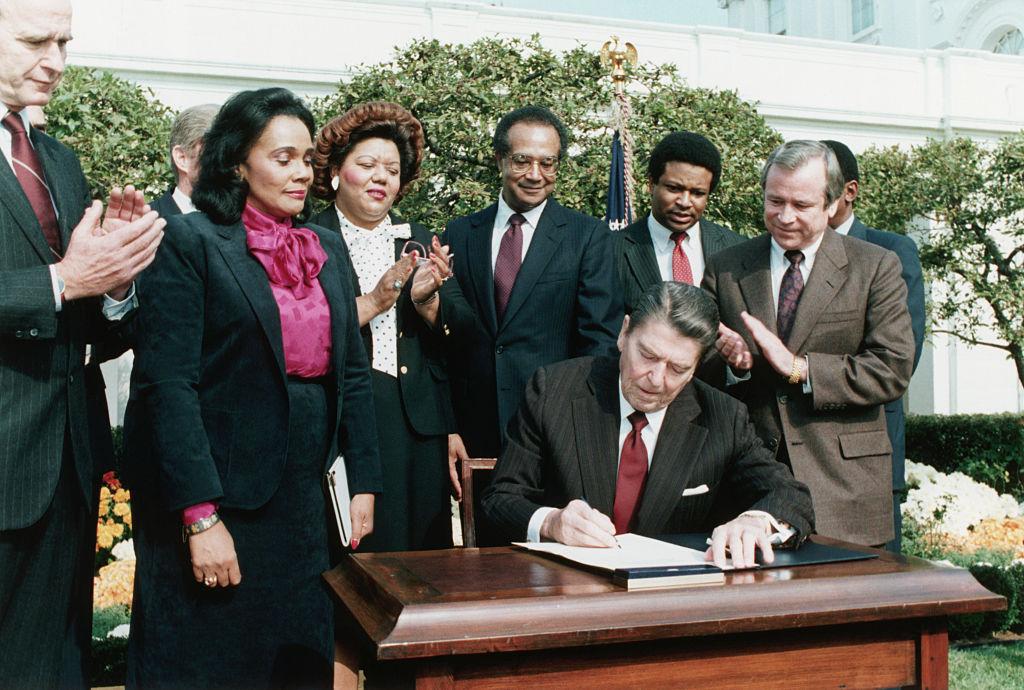
Photo by © CORBIS/Corbis via Getty Images

Even though it failed to pass in the House, public support for the bill continued to grow, in no small part due to musician Stevie Wonder. The Motown singer and songwriter’s 1980 album “Hotter Than July” featured the song “Happy Birthday,” which served as an ode to King’s vision and a rallying cry for recognition of his achievements with a national holiday.
Wonder continued to spread his message with regular appearances alongside Coretta Scott King at rallies. He also capped a four-month tour with a benefit concert on the National Mall, where King delivered his famous “I have a Dream” speech 18 years earlier.
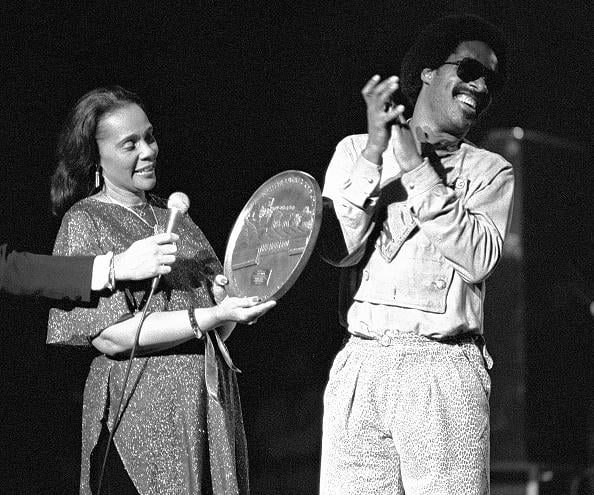
Photo by Rick Diamond/Getty Images

When the bill again made it to the house floor in 1983, 15 years after King’s murder, support was overwhelming. Working together, Coretta Scott King, the Congressional Black Caucus, and Stevie Wonder amassed a 6 million signature petition in favor of the holiday. The bill easily passed in the House with a vote of 338 to 90. However, when the bill moved onto the Senate, Republican North Carolina Senator Jesse Helms attempted to dismiss the legislation by submitting documents alleging that the civil rights leader harbored ties to the communist party. Outraged by the personal attack on King’s character, Democratic New York Congressman Daniel Patrick Moynihan threw the more than 300-page binder to the ground and stomped on what he described as a “packet of filth.” After two days of debate, the bill passed in the Senate and President Ronald Reagan reluctantly agreed to sign it into law.

On August 23, 1994, the King Holiday and Service Act was signed into law by President Bill Clinton. Inspired by King’s life of service, Congressman John Lewis and former Senator Harris Wofford proposed the legislation to encourage Americans to find common causes and methods of improving their communities. In honor of Congressman Lewis’ initiative to make the Martin Luther King Jr. holiday “a day on, not a day off,” the National Museum of African American History and Culture has organized donation drives and partnered with supporters to provide music, film screenings, and interactive activities to the public.